Saturday, April 12, 2014

Perhaps one of most reoccurring question of the day would be what motivates someone to do something? A person goes to a kindergarden school and murders the kids in the school, which is most definitely obscene but the question behind this and much of the research and investigation that will be done after the incident would be regarding his motivation. Therefore human motivation still is a mystery to mankind. Well to kickstart us off, here is a TED talk by Dan Ariely that talks about the essentials of human motivation.


What truly motivates us is not the comfort we will pursue after getting money but it is the action itself. Humans are different from rats by a great deal more literally and also in the mind set aspect. We strive to do things as an facet of accomplishment and achievement. Motivation is perhaps a great factor in our actions and when disregarded brings about adversely negative effects such as the lack of interest in the action itself. This was shown with a series of experiment that was seen in the TED talk. Here is another TED talk that talks about human motivation from a slightly different perspective.


Human being pursue and do actions of self interest that bring about an act of self gain and accomplishment but thats not all to the way people operate and function, cause if that were the case free open source maintained websites like wikipedia would not have bore fruit. Another aspect that motivates us human beings essentially is the fact that emotions play a huge role in everything we do. We do certain things to feel certain ways and like the TED talk explains humans are always seeking to discover greater excitement and essentially the purpose to live is to give back to  the community. Robinson talks about the six needs that we humans strive to complete and full fill and there are some reason for human motivation. So back to the situation, what motivates a person to slaughter the kid? What our of the six needs that we were trying to full fill. Was it certainty, uncertainty, significance, connection, growth or contribution. Some of the option maybe significantly wrong but are always worth considering.

If motivation is from a point of self interest but also from a  point of emotion based actions then how do human incentives work. Yet another TED talk about human incentives and the puzzle of motivation and i do realise it might be a bit to much but this just is fascinating.


There isn't much to say after a TED talk, if anything most of it would essentially just be recounting the idea of the TED talk cause they are just so self-explanatory but essentially human incentives also don't work as humans intended them too, money doesn't always drive thought processes neither does it drive the efficiency of the work results which then goes back to the first TED talk people aren't rats, just cause there is more money doesn't make the work any easier and doesn't make the thinking any better if anything it hinders thinking and blocks the vision of success.

So is motivation coherent or is it this intangible moving force? To boil it down people do certain actions either because of self interest and personal gain, but also with a certain love for the action, or out of an emotional obligation to give back to the community. People are motivated by their actions, their work, their success and their achievements and external things such as money may motivate them to a certain point but overall would dampen their work process. 

Sunday, March 23, 2014


Perhaps the biggest lie in the world is the lie of living in the present. The human brain is understood the receive the "present", process it and then instruct and output based on the input. The time it takes for the brain to process such information always makes the human mind process information in the past because what is seen is always in the past. Such is the case with what we see, the light from the sunlight takes about eight seconds to reach earth and this light then get reflected of surfaces which then get perceived by out eyes which then has to travel to the brain and then get processed and then the give the best sense of perception in terms of context. Since this isn't a biology less about how we see and how our brain process information, lets think about the connection to Theory Of Knowledge.

The thought of living in the past in present is defiantly evident in our thought process. Much of our decisions if not most of them are based on past experiences, pre-made conceptions, steadfast beliefs and past understandings. Therefore most of our present decision are based on our past and who we are essentially as a person. And if so then much of the future and who you will become as a person will also depend on your past and the the principles and morals that you held on to as a child. The idea is an interesting one and something worth pondering.


The decisions we make in the present our based on the past; with that idea in mind perhaps it is easier to understand why the people casually let it be and walked away. They didn't have a connection or a feeling of necessity to intervene or they didn't feel comfortable arguing about it but on the other hand some people hold on to unweary morals that when they see someone in trouble they oblige themselves to help. As seen in the video many of then just walked passed, understanding this was filmed in the united states, people don't generally have that connection or link to the islamic ideals but others regardless defend victims due to self obligation. Much of the present lies in the roots of the past and therefore the past is a foundation for what makes the present. There cannot for that reason be a present without a past and a future without past. Thats why just forgetting the past makes us incapable of living in the present. But sometimes remembering to much can also have a negative impact interns of feelings and emotions that can cause negative effects on that body.

A lot of the problems faced to man especially moral dilemmas are approached from past experiences or external influences. An interesting example is when there is a fight, the social trend is to pull out you phones gather around and film it and therefore when there is another fight you just choose to follow the social trend and choose to do nothing about it like everyone else. However some people can leave things as it is and take action and what kind of person you are depends on the what external influences that you been through. Essentially what man tends to do is move forward in live with the backward trend which leaves no room for irrational trust. Every person you trust has build a foundation of experience in your life. Even banks when lending loans have a look at if you can pay that loan back. 

In conclusion there is no present without past and no present by itself cause your present is past.

Sunday, March 9, 2014

Beauty as described by google is a combination of qualities, such as shape, color, or form, that pleases the aesthetic senses, especially that of the sight. So then the question arises "To what extent is the beauty in the eye of the beholder?" or "Does beauty simply reside in the object itself?". Perhaps the best way to address this is to watch what dove has to say on beauty, cause we aren't talking about beauty if dove isn't included.


The quote in its most modern form is written by Margeret Wolfe Hungerford, in the book Molly Bawn in 1878, talking in literal sense that perception of beauty is subjective. We think of ourselves as less beautiful, less good looking and generally less attractive which might not always be that true. It is because we are talking about ourselves that we become more subjective of our beauty and tend to be more hard on ourselves which conceals the batty of the person. Another person defenatly has another more subjective perception for your beauty which brings about the idea that beauty doesn't reside in the object but perhaps in the viewer. Every single persons opinion on what is beautiful is varying factor. Different people obviously think that different things are beautiful therefore making beauty an indefinite subjective matter. Beauty is an interaction between an object and a person and it is the subjective part that truly gives beauty colour and brings about light. Dove sheds light on the subjectivity of beauty and how our own beauty varies from us to someone else's decryption of your beauty and it is really significant in order to show that beauty is truly a subjective matter. Therefore what beauty essentially is, is subjective perception.

The most common example of subjective beauty is witnessed in art where the beauty of the art piece is not necessarily admired and adored by everyone and perhaps sometimes even criticised and perhaps hated given extremes. The the idea of subjective beauty truly comes alight with artworks. To give examples below are two pictures that are famous art pieces by famous people.


This is one of the most famous abstract painting that really brings about the idea of beauty. The picture displays the idea of beauty through abstract and the mixture of the different colours truly brings out the different emotions to play. However this is aspect of beauty is only truly appreciated when the person is fully visually able to see the different aspects of the picture. A colour blind person for instance or a visually impaired, or another person on the whole might not necessarily get that same implication of the art work. The beauty of the art to some people is lost and the beauty of the art price is not passed on and not always appreciated by the viewer who is the beholder. Therefore in such a case the beauty of an object generally resided in the eye of the beholder.


This beautiful art piece made by Damien Hirst  that was recently displayed in Qatar, has stirred up a lot of controversy and a lot of people having subjective thoughts against the beauty of the art work. The art work that has jewels on a skull which really marvels the beauty of the skull and amplifies the beauty of the human face at the core.A lot of religious people and some others found this offensive and has indeed caused much controversy for the same art object. So if some people really appreciate the art object and some people find it offensive and hate against it, the beauty of the art cannont be in the art piece it self but will definitely reside in the observer.

However beauty is not always subjective, sometimes have a general objective aesthetic value. For instance there was a research conducted from different cultures and what the researchers found that people with a faces of certain proportion where more liked generally by people. This research concludes that people with certain face proportions are more generally liked and therefore in this case the beauty tends to be more objective, in the person itself. Another case of objective beauty is seen in the Fibonacci sequence which is the patter for a lot of the flowers, trees and many more works of nature. The beauty of the sequence works out to have such great implications on real life that it is truly a beautiful sequence. Again there is a certain objective beauty but not necessarily recognise by everyone.

So does beauty lie in the eye of the beholder? Perhaps in most cases beauty does lie the eye of the beholder and is more subjective in the viewer. But what beauty truly is the appreciation of subjective perception that is to me glorified. It is magnificent that out senses are gifted with the ability to pick up all the sense and all the senses together forming a big picture to identify something and to see something is really by itself true beauty. Perhaps much like what Victor Hugo says, "To love beauty is to see light". We humans take our gift of vision for granted and the gift of seeing the world around us is a beauty by itself. Hugo says that by just seeing light rays you would have come to love beauty. Perhaps we should all just take a moment and appreciate the beauty of the vision of our eyes.


Saturday, March 8, 2014


The challenge was simple, it was to find the rule that the sequence follows. But it proved hard for many to get to that specific rule because of another pre-made rule that they had put together in their minds. The fact that they have made this rule and based it as foundation to make their guesses was the sole reason that they were blinded to the many other possibilities. When there is a foundation build based on a basic reason the guesses made always ensure that the foundation stays true because if the foundation is weary then to build further reason seems difficult. Figuring out and using the clues to put together basic essentials of the puzzle to build a foundation of assumption to then work upon it to solve the puzzle is a key element. The loophole is when the foundation that is build on assumptions is wrong, the theories made based on such assumptions also are wrong and play dead in the sight of the answer.


There are perhaps two ways of acquiring information inductive reasoning and deductive reasoning both clearly and explicitly described in the video. Both inductive and deductive reasoning are key essential parts of reasoning to figure out puzzles. In the puzzle such as sudoku or the paper puzzle a great deal of inductive reasoning was used in order to figure out the nitty gritties of the puzzle and using the key information in our favour way a way of solving the puzzle. However in the "crazy captain" puzzle a great deal of deductive reasoning was used in order to identify the items and to figure out a rule and to propose items that fit the rule. A great deal if deductive reasoning was used to find out the similarities between the items and the chronological order the items followed. Therefore both inductive and deductive reasoning play a vital key role in solving puzzles that are relatively hard.

When solving a puzzle the brain is assessing more than the question itself and perhaps going to the deeper bits of the question and this is generally played upon by the classic brain teasers that use the general presets and assumptions to tease the brain. It works well as given a riddle the mind is looking deep within and not assessing the answer on the surface. When solving the "crazy captain" puzzle much of the intuition went it understanding and drawing patterns for the items that we were allowed to take aboard on the ship but then again the trick was in the question and not in the items. However this is not necessary for all puzzles, our puzzle happened to be this way but then the general prefix of puzzles cause people to complicate things more that it is needed causing them to befall traps never made but set out by themselves. Simple logical use of reason can defiantly bring about a sense of constant understanding and logical thinking that can intern solve the problem, without all that hassles and the complications on the road, but it is when such simple logical reasoning is backed up with prefixes and assumptions that cause loops in the theory.


Perhaps a bit too many videos for a blog, but this TED talk talks about reason being a way of understanding a being more civilised and humane people. In the past man as seen to have some cruel tortures methods, that have brought about a great deal of human pain and suffering such as slavery but it is human reasoning that brought about a way of us realising that these practises are indeed immoral, unfair and moreover inhumane. We have come to be more civilised people and have come about to make a better world not only for us but for the coming generation and the one that follows. We have abolished the inhumanity in our system but still have long way to walk to bring about a better world. The TED talk compared human emotions with human reasoning and sought to seek out which one had a more prominent effect on the past. Clearly reason has seem to win the battle but a great deal of pathos was involved in bringing about the right ideals in out government system. 

Overall puzzles such as sudoku are really a great test of human reasoning and are essential aspects required to bring about a sense of rational reasoning. All though hard or easy they set out to test a great part of human rationality and reason which is perhaps the best part of the puzzles.


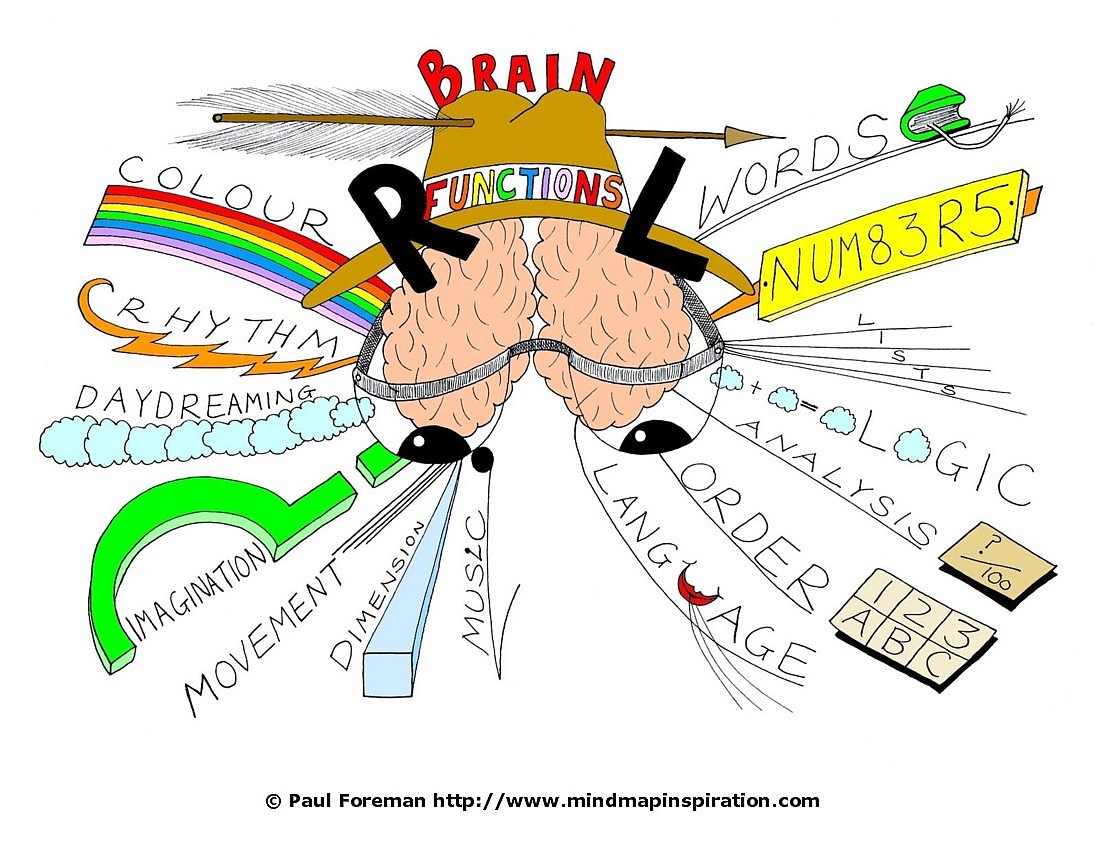
Slightly on a tangent the brain use two structures of information to understand the world around is. In the video above which seemed really interesting the idea behind the bi-logical thought processes are identified in the brain. The use of different brain structures causes slight draw backs in the way the brain perceives the surroundings and it causes slight draw back in our sense of recognition and understanding. The brain however puts the information it receives in context of the surroundings and always looks to produces a more efficient representation of the surroundings in comparison to a accurate representation which explains why the human brain is prone to the many different illusions. The brains is nonetheless a magnificent organ that brings about a sense of understanding and reason and brings about a efficient comprehension of the world around us.

Sunday, February 2, 2014

The world is round and it bears billions of people separated by the lines imposed by man and by
waters that run between them. The billions of people around the world have made countries
their own and have separated themselves from one another and let divisions be made. The separated countries have different languages that are part of those countries. for example in India the people speak hindi, well thats the official language, there is a lot more languages that go around for each and every state of india but for the United States of America the language is english and in Spain it is spanish. So evidently given the examples you see different countries have different languages. However if countries could all speak a language there is a sense of unity despite the diversity. We has the human race all come together to speak a single global language that when aliens come on earth they know yeah thats their language. if aliens come one earth now, they go back confused as hell, trying to decipher all the languages, for all we know, they wouldn't even know its different languages. Under the umbrella of a single unified language, we the human race can come together and set aside our differences, we can appreciate one another, communicate to another and defiantly travel to other places without having to worry about speaking an entirely new language. A unified languages brings about simplicity and irons out all the wrinkles on the road. If humans spoke on language we wouldn't need the apps on the app store designed to make translations easy and faster and away with all the extra language classes and definitely no more human translators to translate anything during business conferences. In such cases diverse language although it would look good on earths resume, tends to be a barrier that obstructs convenience. We would gain an identity as a global race and sense of togetherness in how we interact with one another. However with major possible drawback is that lost sense of nationalism, the language that a country speaks is its pride and joy. That language is life to that country, it is the way they talk and communicate with one another. The implementation of a unified language would mean that countries would loose that sense of nationalism, pride and joy. It would mean countries to loose their language and earth loosing a sense of diversity. However much of a headache translation is, sometimes learning new languages seem to be an exciting feat and to some learn more languages is a content life. Therefore unified languages would indeed take tolls on certain aspects of nationalism and pride for an individual nation but would seek to bering the world as a whole, a world where people can communicate without barriers, one where they can feel and understand each other.

“The Miracle Worker” was a movie about Hellen Keller a girl who is blind and deaf and her teacher’s experience in teaching her language to come to know the world around her better. Watching Hellen Keller in the movie "The Miracle Worker" urged me to volunteer at the Kerala Blind School Society. The experience was defiantly different than that of everyday. The blind really use their other senses such as touch, sound and smell as ways of knowing whats around them. Reading brail and trying to read and understand what was said was really hard but the blind where able to read them like how we read letters and they were able to read sentences together making their reading quite fluent. They were even climbing trees based on their sense of touch and it was massively impressive how much you could actually do with touch. Another great aspect of the day was blind cricket where we would have to hit the ball with a bat based on the sound the b
all makes while rolling. Giving it a shot, the realisation came upon me that it was indeed a really hard challenge. Assessing Hellen Keller after this experience brought about the thought of the difficulty of life in her perspective. Language as a way of knowing the world around us became truly essential, as we humans have named object around us, it is essential to know them to, to understand the relation between an object and its word. Hellen found this difficult because she was deaf and blind which makes her absent to two fifth of her senses. Learning language for Hellen was an understanding that there was a whole world of things that existed around her, that there was a whole world a possibilities that engulfed her and learning language was a way that she could have possibly communicated to her parents through the use of sign language. Blind people generally use sound to understand the object as a name and it using that sound that they understand they put two an two together to make sense of things. Hellen on the other hand who was deaf and blind had to use the medium of sign language to understand that the object meant something and that it had a name, that the object stand for a thing. She had to use the medium of language to put the idea of an object together with a name to make sense of things. However what Hellen also demonstrated was that language although a primary way for us fully capable humans to communicate, was not the only way to communicate and there were other ways of conveying ideas such as sign language. Language as a way of know differs for different types of people as back in the time of cave men and women, language was probably not a way of knowing like it is today. Language is an essential way to know the world around us but perhaps in not the only way to know things around us. 

Saturday, February 1, 2014

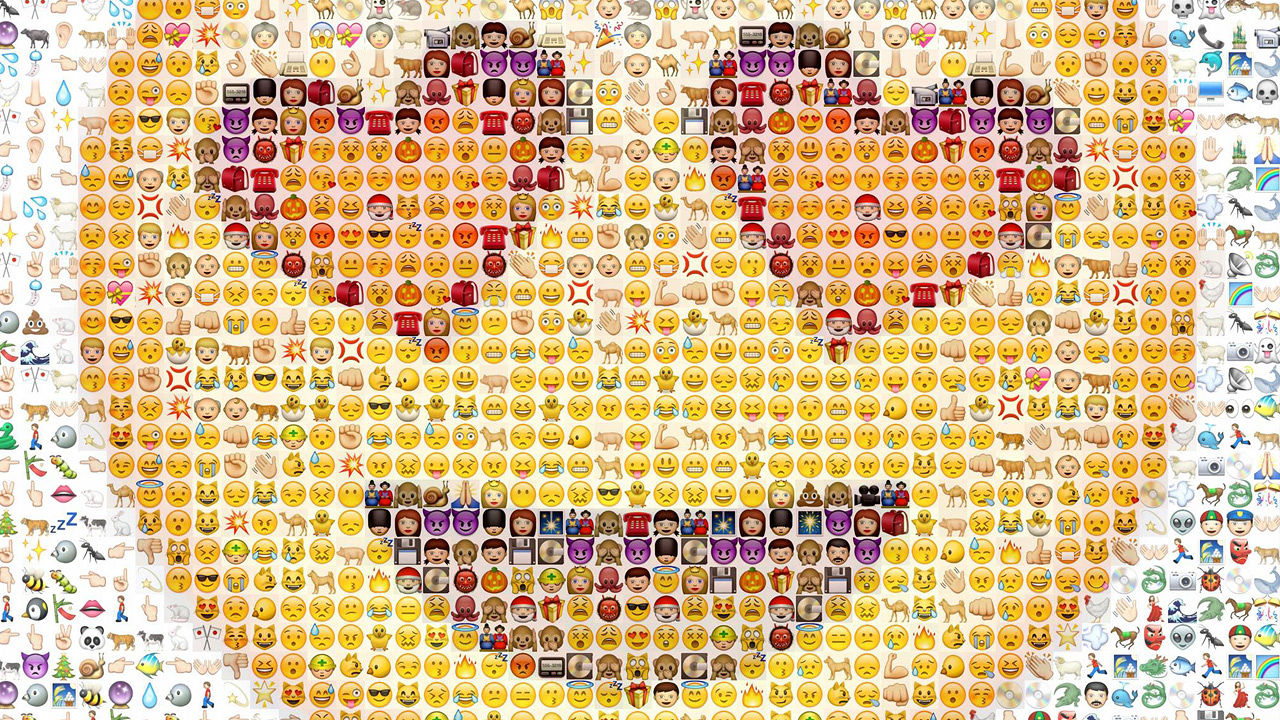
The topic of language as a means of communication and conveying ideas, has led to the little faces that people send to one another in order to covey not only their message but their feelings. The Japanese little faces called "emoji" that means "picture character" is in ways an expansion of human language. The small fragrant things such as the feelings and expressions at the time when you are texting or messaging are not truly expressed in words and can be the hardest to say but perhaps expressing them in the form of little faces could convey the idea or the feeling far better. Expressing words inform of emojis are an expansion of the horizon for communication through the medium of language and this expansion is resulted in positive interactions with people to understanding one another far better. With the use of these little faces, one is able to say something and express the feeling she is feeling wether it be angry, happy, sad or sahappy and the receiver can respond accordingly taking into account the feelings. The conversation becomes more lively and realistic as there is an interaction that conveys both ideas and feelings, which has indeed made these "picture characters" very useful and fun to use.


As seen in the video, the small little faces have changed from being an new page to a completed book. The whole set of emojis has brought about a change in the brains of mankind formulating a sense of recognition, understanding and is a proof of the diversity of language. The human brain is starting to recognise the little faces more easily causing us to understand them better and add it to our daily vocabulary

There is a progress in terms of education and the gaining knowledge. In relation to the context of language there has been of development in the way we sent text which has gone from just texts to emojis and now to bigger version of emojis known as stickers. Language is therefore a development and is an open discussion, which kind of explains why there are new generation messed up words that enter the dictionary every now and then like "selfie" and "twerk" which are now actually officially words on the the dictionary and "selfie" was the word of the year in the year 2013. But the progress of refining language could only result in an positive out come, as the more words we have knowledge of the more words we can use to describe something or perhaps find different ways to explain something on an english essay which is always crucial. Language therefore is indulging in a constant process of progression where it develops and enhances itself for the people of the generations to perfectly express themselves and their feelings and  therefore languages has to constantly adapt the needs of the people. Language is never seen to however indulge in a process of regression, the reason being language is a widely needed tool in order to express one self and taking away words to communicate would require us to resort to sign language which is rather backward, time consuming and require a lot of time and effort to get used to not to mention that it is highly inconvenient; but if there is ever a positive to that at least the deaf can feel at home. All jokes aside the benefit of language is gained only when it progresses and amends to the needs of the people interns of conveying ideas and expressing feelings.

Language is a universal way of conveying and expressing ideas and feelings. Although a lot of people  might have different languages, people still use a medium to convey ideas and feelings. We as human beings are social animals and the urge to convey thoughts, ideas and express our feelings tends to be a universal desire, therefore making language more universal method. Language however as discussed before is a progressively changing aspect that amends to our needs of expression. Language   doesn't drastically change over time, unless Germany won the war and we would all be speaking german the next day, but that aside language has build a strong foundation and any new word would be something that is culturally new or is a new aspect of life. Taking for example the new word that has entered the dictionary in the year 2013; the word "harlem shake" was a dance that dominated the internet and brought about a new cultural aspect to our global world. The way to express this dace was by calling it "harlem shake" and was a way of conveying the thought of the dance to another person. In such way language has developed to help convey certain ideas to other people; analogously what the development of language revels to us is that there a development in cultural and global aspects of mankind that we require new words to describe them in order to covey that thought to someone else. What development in language comments on the human race is their development, evolution and global growth. This would intern language to further develop to amend to our needs of expressing our selfs.

There are some famous theories that discusses the development of language in little children. Some different perspectives of the same development of languages seems to contradict each other and this is truly interesting as the one unified thing such as languages is seemed to be developed by people in different ways. For instance B.F. Skinner believes that language is developed through positive reinforcement of language, that is when a baby babbles 'mama', the mother smiles therefore re-enforcing the child's learning. But on the other hand Noam Chomsky disagreed suggesting that children are born with an innate language acquisition device congenital understanding of deep structure of language which is its grammar. The idea of positive affirmation and re-enforcement the development of language defiantly stands true as children understand simple things such as smile and therefore get a lot of the simple language. Whereas children are unlikely to be born with such innate language acquisition device, as such thing would perhaps be to complex for the baby. Children however start to pick up most of the grammar that they learn and the words that they lear by listening. That is the key to a child's development in language. An example of this would be my cousin who as he grew never spoke a word but at the age of two or three, he was sitting with my dad and said "Look at how beautiful the roses are", now that suggests that he was always listens and putting two and two together in his mind and understanding the little wonders around him. He never spoke until that stage and most of us thought he couldn't speak but when he did speak, he spoke a whole sentence which threw us all off. Well both Skinner's theory of positive reinforcement seems to stand false as he never spoke till then but on the other hand Chomsky theory of inherit understanding of the grammar could possibly seem true at that point. But the idea of children understanding and learning through listening is also important and significant. This explains why children generally
learn to speak the mother tongue fairly well but might have problems reading and writing. This is because parents might speak the mother tongue at home which makes the kids understand and comprehend by listening and seeing. Kids are able to assume, guess and put things together to understand the language and if it is correct then parents positively re-enforce the idea. So therefore perhaps both of the theories come together to understand the development of language in children but essentially the idea of listen and understanding is also a major aspect of the development of language in children.

The idea of thought before speech or speech before thought has essentially become a great topic for debate, however it only seems logical to think before you speak. Language in thought is essential to speak. There would be no understanding if there was no language in thought. Everyone thinks in a certain language be it english, arabic, french or Canadian english. If you take away that language the thought seems impossible for language is a medium through which thought can take place. If there is no language there can possibly be no thought. The idea of thinking without language seems impossible but however that sparks the debate on how deaf people think or how babies think. The human brain tends to process information through the use of the five senses and therefore a babies thinks in the aspect that they are born with which is the eyes. There is a sense of visual understanding and visual thought in young babies and in the deaf even in grown humans when describing something abstract such as peace or love the picture of a dove or a heart pops to mind. Also for someone who is blind and deaf like Hellen Keller, when she was presented food in the movie "The Miracle Worker", there was a sense of recognition with that food. She might not have necessarily know what the name of the food was, but she recognised the food by smell. Hence there was a recognition, therefore for people who know language thinking using language as a medium seems essential but even people without the knowledge of language have some sense of recognition through medium of the five senses.

Going back to the theory of children's having the ability to listen and understand by putting things together explains why during the holophrastic stage, the child speaks sentences using single words. This is probably because of the child's association of that word with an action. The child has understood that the word means a certain action and therefore speaks sentences in single words. Also when the child says such single words such as 'more' and the parent gives more of something, through the idea of positive re-enforcement, the child then tends to say 'more' to get more of something. The child has associated the word with the action and this association in the mind of the child has brought about a sense of understanding for the word and it's action and causes the child to say the single word to get the output. If the child is given more of something by saying 'more', why would the child need to say 'can i please have more?', if the result is the same. Obviously it is nicer to ask the the latter way but the child isn't processing a lot of the language at such a stage and is taking baby steps into the realms of language.

Sunday, November 24, 2013

Beauty (by Grace Nichols, 1986)
Beauty
is a fat black woman
walking the fields
pressing a breezed hibiscus
to her cheek
while the sun lights up
her feet

Beauty
is a fat black woman
riding the waves
drifting in happy oblivion
while the sea turns back
to hug her shape

Our society has drilled into the people that beauty is the skin on the surface that adds appearance to the structure of a person. We have perceived beauty to be that perfect slim, smooth skin girl with the perfect cut hair that complements her appearance; or a guy wearing a tight shirt that further complements his body build with the dazzling smile across his face and the beautiful eyes staring at you. We have put the word "beauty" with "perfection" and expected to see them in pairs. The pressure that society has set for young girls and boys to be "beautiful" are relatively high and are so unrealistic in order to sell you products that apparently makes you more beautiful. The problems is that we have blindly taken society's definition of beautiful and have started battering our faces with creams, swallowing pills and applying creams, herbs and medicines to be perfect; however what we don't realise is the fact that beauty is found in the person and not the skin that engulfs the person. The poem by Grace Nichols further conveys this idea; Grace compares the definition of beauty to the exact opposite facade of beauty that society has thrown at us. However what grace does is that she throws a contrast in the visual description of beauty but then describes that activity the person to do a true act of beauty. Grace describes beauty to be a thing that a person has a hold of and is not something that a person has to necessarily acquire. Beauty is not perfection but the understanding of joy and happiness against all odds; beauty is in the action not the reflection; beauty is in the core and not on the surface.

Looking at these videos you can see there is something fundamentally wrong with the what society has told us what beauty is. The visual aspects of both videos shows the stereotypes of beauty, they show what society wants us to think what beauty. The first video portrays the idea that the beauty that society shows us to be beautiful is photoshopped and edited which makes it fake. Therefore we as humans are killing ourselves over by taking pills, applying creams and herbs in attempts to achieve a body that was initially photoshopped. Which brings about the idea that beauty set by society to be perfection can never be achieved regardless of products they sell you, so then what beauty truly is, is the person as the person being. The second video complements a similar idea that shows the nonsense that society breeds about beauty to kids, teenagers and adults.

By visually demonstrating truths, facts or any problem for the matter one is likely to convey more persuasive aspects. Visuals imagery helps us imagine the consequences and the different problems of our world. Visual imagery helps show a clear cut problem which persuades us more towards the solutions and visual imagery is one of the most attention grabbing and persuasive structure. Showing the behind the scenes of the many advertisements and showing our mindless struggle for beauty we are able to comprehend a clear problem. Showing this thorough visual media we are able to understand the different truths and formulate our opinions and understand that beauty is not what society tells you but is what we as the people make it to be. 


Humans are limited but at the sometime expandable, we can use our eyes to see but our eyes which have certain limitations are great for perceiving and understanding complicated patterns and sequences. Our eyes and minds are vulnerable to great deal of visual persuasion and therefore there is the questions that how do we know if what we see is actually the truth out there? maybe it is or maybe it isn't. A great of convincing is done through the images and a little play in the images can greatly affect out understanding of any matter. The idea of trusting our senses becomes an arising questions the longer we think about it, but there is no choice but to trust our senses and make the best of it. 

Saturday, November 23, 2013

The world is a perception of our senses and a translation of the brain to make the reality in which we
live. The brain in our heads makes the bridge between us and the world around us. The creation of that bridge or perhaps the translations of the perceptions of our senses are greatly influenced by external factors. Like discussed before the choice we make in the situations we are in a influenced by the options presented to us, or what we hear, see are all influenced by what we know already or what we understand so far. To come to terms of why are sense are changing variables or unreliable at times, requires us to understand that everything we see is just a interaction of light and our eyes. Everything else is just a interpretations by the brain of this interaction.  Therefore during this interpretation of our perceptions the brain tends to rely on our past experiences, patterns and sequences to put together the world we live in. Therefore as a fact what you see is not what you believe but what you believe is what you see. some of the few problems that sense perception boils down to can perhaps be identified and realised, however knowing these problems does not make our senses any better and these are fundamental defects in our senses.
  • Past experience - Past experience is rather relevant as the brain uses past experiences to prepare itself for future ones. It tells signals the body to predict danger or to convince us that orange juice is orange juice. A lot of life is based on past experiences and experiences to others. Therefore the brain tells us what to expect this based on past experience rather than what actually happens.
  • Through social and cultural conditioning - We have multiple social and cultural aspects all around us and such thoughts and judgements often lead us to expect something that could possibly be wrong. The culture and social aspects much like past experiences have conditioned us to expect something when that is probably not the case.
  • Through spatial familiarity - Our brain processes information to identify patterns and shapes which we already posses and ridged understanding over. This methodology of understanding and perceiving causes a loop in our sense that cause them to be unreliable and cause us to perceive differently. 
  • Through our biological limitations - The human senses are limited to a certain degree of information at a time, and this is a factor that affects how much we know and the affects are perception of the world around us.
  • Through existing learning structures - The way we perceive the world around us can be greatly influenced by an important conceptual alternative ways of knowing.
  • Through seeing the in existing - The human eyes are capable of seeing optical illusions that cause the eyes to see what is not there and this further makes the senses unreliable. How are the human eyes able to see what is not there. 
  • Through our dependence on language - The use of language around us vastly affects the way we perceive objects. The use of more positive words towards an objects tends to make it more attractive and more appealing to the people and therefore language plays a vital role in the way we perceive the world around us. 
  • Through filtering - The human mind receives a lot more information than what is processed and the irrelevant information is filtered out causing the person to ideally focus on a particular bit of information. This affects our perception of the surroundings as the perception is generally limited to certain bits of information to maintain focus and enhance the work efficiency.
  • Through self perception - How the human body thinks of itself will greatly affect the information taken by the person and this is relevant as this is different for person to person 

“All seeing is seeing-as… There is no ‘innocent eye’. In order for you to receive something you must add to your sense data; you must furnish an element of projection.” R. Abel. 
Tautology is the practise of re-emphasising the same point with the use of different or more complex words. Establishing an understanding of the limitations of our senses and understanding how we perceive the world around us differently; attempting to explain this quote will require one to implement tautology. The idea that people perceive information differently is widely acknowledged. There are some fact that we humans have kept general to all, such as gravity is 10 newtons, if you jump of a cliff you fall or there is oxygen in air (a more tok example can be that if you are nice to your tok teacher, you are sure to get chocolates). However more life based examples are always influenced by the people around us, the choice we are presented with and many more. There is no information that is not influenced and this is because of our brains mission to find patterns and rhythms in our lives. Therefore when we perceive something we use prior experience or knowledge to further improve the perception of the present. We use the past to make decisions and better perceive the future although they might not always be correct or useful at the particular place and time. Sometimes a quote just says it all and there is no better way of saying it.

Although the human senses do have certain limitations and are blinded by them, these limitations can indeed cause us to perceive the world differently; however our senses always brings about a sense of appreciation for the world we live in and that is elementary and essential. 


The Truman show was a wonderful movie made in the 1998. Now if you don't want to walk into spoilers please do go read the other wonderful posts or watch the movie in this link here: http://vodly.to/watch-1509-The-Truman-Show; and if you want to check out the review before you watch the movie then check the review here: http://www.imdb.com/title/tt0120382/?ref_=nv_sr_1.  Now that you are fully loaded we can address the more TOK part of the movie. 

The movie showed the life insurance salesman/adjuster who discovers his entire life is actually a TV show. That the gist of the movie, the person realises that his life is a sequence of patterns and everything in his life is staged and set to make the show interesting. He realises certain things that make him question his life and that makes him want to travel to find the girl of his life. He eventually finds the way out of his world and possibly made it to the girl of his dream. Well thats all the retell, you could either have watched that or stayed here long enough for that short retell. 

When it comes to the the emotional reaction a viewer has to the movie, it was sort of based on that idea of control, of what you do in your life is controlled by someone. This idea has be shown in many movies such as "The adjustment bureau", "The hunger games",  "Death race", "Oblivion" and "Gamer"; these are some really good movies (review links below) that plays on the idea of control and this is really a factor that really causes a sense of uneasiness. We all have a feeling of freedom and we are proud to feel that way and the thought of you being controlled by someone causes a revolting feeling wanting you to gain that freedom of being a true individual. We as individuals have the right to freedom and the idea of being controlled or played with causes this sense of inferiority. The idea of people being controlled is a rather angering one and cause that need to be free.

The camera angles of the movie played an essential role in the plot of the story. In fact the whole plot structure of the movie was well thought out. The idea of spoon-feeding information about the story bit by bit and having the course of the story takes its path along that is a splendid way to keep the audience hooked and also to keep the movie more entertaining and to let the people who have no clue whats happening, whats happening. The camera angle essentially contributed to the idea that the protagonist of the show was actually in a tv show. It shows that the whole thing is a tv show and it shows the idea of the protagonist being watched all the time where ever he goes. 

There is that beautiful irony where the reporter says.“Thank you for coming today Christof, I know how much you value your privacy.”; and whats ironic is the fact that the director Christof isn't really there with the reporter and in fact the interview is happening over video call. This is really interesting and brings a sense of an introverted personality but also a sense of secretiveness. In terms of the real world this is probably seen in the case of top secret stuff where nothing is spoken of but a movie director taking that sense of privacy and secrecy is rather unusual. 


Taking another look at the end of the movie, although Christof was portrayed as the bad guy controlling the life of an individual Truman in order to make a profitable television show still stands, the probable other aspect could be that Christof was indeed a visionary who wanted the best for Truman in the reality that he was presented in. Christof realised that the world we live in is a world full of lies, deceit and with no more truth than the world Christof created for Truman (although Truman's whole world was a lie) but the idea is that Christof was indeed looking out for Truman and seeked what was best for Truman which also got around making him more profitable. We learn through our failures and that is what makes us succeed; Christof nullified that idea of failure for Truman and all actions that were made by truman where made to keep him in the path of success. Christof strayed Truman away from failure which makes him weak as only in our failures can we be truly strong. However Christof helped inspire and give hope to millions of people around the world by the means of his television show. He helped inspire people and helped them aspire for a better life. He used the life of Truman to help give hope to people and show that life can be worth living. An example of this can be seen when Truman was escaping, Christof challenged Truman and made his voyage a difficult one but Truman persisted and maintainted his will-sprit to succed and this showed the people that a person "will" to do something can never be crushed and if there is a will there is a way. Christof tried to show people an ideal world, a world which all the people could strive towards too. Christof indeed took more action in Truman's life to make it more meaningful, to make it better and to make him enjoy himself a lot more and this makes him more responsible that the people who ignorantly watch the show for their own entertainment and pleasure. Yes, Christof took active responsibility in making Truman's life a sort of Ethiopia where everything is good and green but that doesn't mean he is not in the wrong for controlling the life of Truman and deciding aspects of his life. 

There was an ethical issue the movie was trying to convey and it was probably the idea of controlling someones life. It is seen in the movie where truman's every decision were indirectly controlled through his friend or wife. As mentioned before, the idea of of controlling someones life is taking their freedom away from them. You rob them from the freedom of living their lives when they can travel, live and do whatever they want. The idea of controlling someones life to make money of is ethically wrong. Freedom of life is one of the fundamental things that should be given to man and one of the critical things a man can be robbed off. Robbing someone from the right to live their life with their freedom is blinding him from true reality. 

The Truman Show shockingly reveals to us the depths to which our society has sunk.  In realizing this, we are forced to examine ourselves as individuals to see if we are part of this declining mentality. As we go deeper, we are awakened to realize that it makes a scathing commentary on us as a society and our obsession with money, entertainment, and the lives of the rich and famous.  Going even deeper, at the core of The Truman Show, there is a message aimed at you, the individual.  We cannot help but examine ourselves as an individual contributor to our declining culture. The Truman Show not only questions the morals and of our society and media, but it also forces a face to face encounter with the fundamentals of our own ethics.  The media’s role in today's society has been has expanded to have a gigantic influence on us and has greatly affected our values.  The Truman Show questions these values of society: our disregard for privacy, the sacrifice of morals for money, the paparazzi, our obsession with celebrities’ lives, and the extent to which we will go for entertainment. The Truman Show is just such an example of this exploitation of lives exhibited for entertainment.

“We accept the reality which we are presented.”
It is indeed a true quote and people in connection to the real world do accept the reality which we are presented in. We live our lives as if it were our lives and we have no doubt that we might all be played on a tv show by some aliens. I always thought that my life was a story book that god read and i am just re-enacting it. Its a thought that came to me when I was young but the reason to believe that this world is not reality is hard to believe although it might not be. Its similar to the truman show where he thought his life was his life but his life was actually a tv show. We humans can't comprehend the extraordinary and tend to accept reality as it is. It is a rather interesting thought that we subconsciously accept the reality that we are in and do nothing to question it. As Albert Einstein said "Reality is just an illusion" and is mearly what we humans make it, although the reality we have made and set before us can indeed be a persistent reality that we have assumed to be reality. 

Television, with insatiable hunger for material, has made celebrities into content.”-Roger Ebert, 1998, Chicago Sun-Times. Indeed one of the things that was shown towards the end of the movie is that people don't actually care about the protagonist, they just watched to show to see what happened. Television has made people want to watch it just to see what happens to the persons. People watch tv shows just to know what happens to the celebrities acting in it. Television is that idea of wanting to know about people's lives but in actual fact if something happened to the character people wouldn't actually kill their lives over it. Similar to the truman show the hunger games is a movie where the lives of people are played with in order to make views satisfied. Why do reality TV shows makes us viewers content and happy? 

Appendix 
The adjustment bureau : http://www.imdb.com/title/tt1385826/
The hunger game : http://www.imdb.com/title/tt1392170/
Death race : http://www.imdb.com/title/tt0452608/
Oblivion : http://www.imdb.com/title/tt1483013/
Gamer : http://www.imdb.com/title/tt1034032/
TED talks always get you to think about a certain idea which always has a good point of view and gets me writing yet another post about but the two videos are quite relative to TOK and thats great cause thats more to write about.

The world is full of wonders, there is so much to see, hear understand, recollect and reminisce. Well our  brain being such a complex organ, that lets you perceive vision, audio and pain is apparently is bad at multi-tasking which rises the question how are we such great multi-taskers if our brains is not. Apparently we aren't great multi-taskers as switching between tasks isn't multi-tasking and that makes more sense to be honest. Well our sensory organs however great they are have some limitations and watching the TED talk will probably explain it far better.

That was a mind boggling TED talk, well to be honest it was more show and tell than a talk alone. But it was impressive nonetheless. This arises the question how far can we trust our senses? Senses are something we use everyday and something you invest a lot of your time using and the fact that these sense are probably at times unreliable brings about the idea of uncertainty. Our brain being so complex, yet it cant cope up with multiple things, this is a loop that can be exploited and is a fantastic way to probably pick up some cash on the way to school (and return it obviously cause then it would be steeling and thats just a no). Our sense are dependent on many factors, who you are,where you are, and so on and such great influence on senses greatly affects are senses which brings us to two things, one how can we trust our senses despite them being so unreliable? and two another TED talk :) .


So not only are our sense unreliable at times but our decisions are also based on external factors. Its wonderful how the world around us can have such great influence on out sensory aspects and also our logic aspect of life. As seen in the video different external factors play a huge role in our lives and is essential in making decisions.

To conclude our logical reasoning and our sensory organs both have there limitations, so that brings up the question, what can we trust? Well despite the limitations of both logical reasoning and also sensory organs, these are essential in our way of life and in our path of know how we know and what we know. Senses are essential and are the colours that paint the world around you.  It is the means by which we perceive facts, data and other aspects of life and our logical reasoning is essential in making decisions in this painted world. However influential our senses and our reasoning are doesn't change the fact that both of these are solely essential for us human beings for our way of life. 

Speaking of life and painting, there is an amazing inspirational quote that really stood out and truly gives an appreciation for life, your senses and your logical reasoning.

"Everyday is a brushstroke on the canvas which is life, and in the end only you can see the mistakes"
- Rebecca Hitchman


Copyright 2010 Theory of Knowledge .